
My Absolute Favorite Stone: Let's Explore the Mystique of Labradorite:
Labradorite captivates many with its shimmering play of colors, often described as a magical glow or iridescence. This natural stone has fascinated collectors, jewelers, and crystal enthusiasts for centuries. Its unique optical effect, known as labradorescence, sets it apart from other minerals. Understanding how labradorite forms, the different types available, why it remains popular, and where it is found adds depth to appreciating this remarkable stone.
How Labradorite Forms
Labradorite is a member of the feldspar mineral group, which makes up a significant portion of the Earth's crust. It forms deep within the Earth's mantle under high temperature and pressure conditions. The process begins when molten rock, or magma, cools slowly, allowing crystals to grow. Labradorite develops as part of igneous rocks such as basalt and gabbro, and sometimes in metamorphic rocks.
The stone’s signature iridescence results from the internal structure of thin layers within the mineral. When light enters the stone, it reflects off these layers, creating flashes of color that can range from blue and green to gold and even purple. This optical phenomenon is called labradorescence and is caused by the diffraction of light.
Different Types of Labradorite
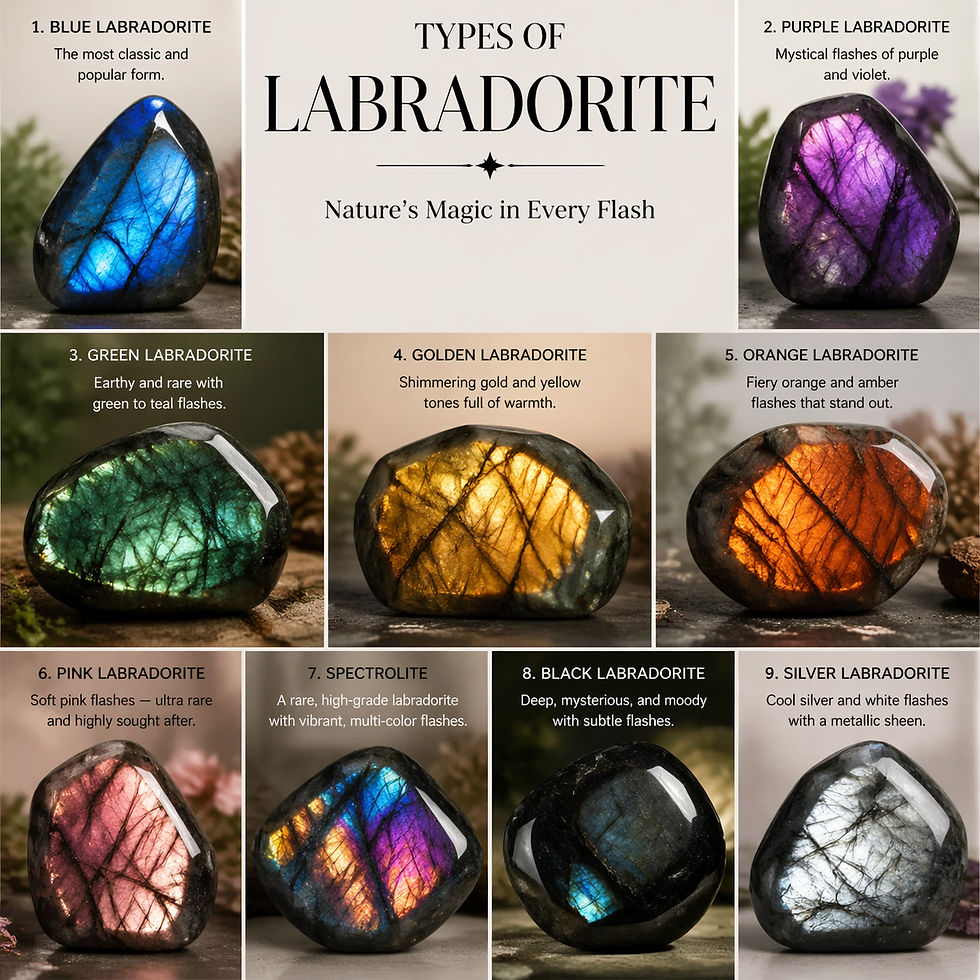
Labradorite comes in several varieties, each with distinct characteristics:
Spectrolite
Found mainly in Finland, spectrolite is prized for its intense and vivid color play. It often shows a full spectrum of colors, including fiery reds and oranges, making it highly sought after.
Rainbow Labradorite
This variety displays a wide range of colors, often with a dominant blue or green flash. It is commonly used in jewelry and decorative pieces.
Sunstone Labradorite
Sometimes labradorite contains inclusions of copper or hematite, which create a sparkling effect known as aventurescence or sunstone effect. This adds a warm glow to the stone.
Common Labradorite
This type has a more subdued color play, often gray or white with occasional flashes of color. It is more abundant and less expensive.
Each type offers unique visual appeal, making labradorite versatile for different uses, from fine jewelry to ornamental carvings.
Why Labradorite Remains Popular
Labradorite’s popularity stems from several factors:
Unique Visual Appeal
The stone’s shifting colors create a sense of mystery and wonder. No two pieces are exactly alike, which adds to its charm.
Metaphysical Properties
Many believe labradorite has protective and healing qualities. It is said to enhance intuition, reduce stress, and promote transformation. These beliefs have increased its demand among crystal enthusiasts.
Versatility in Jewelry
Labradorite’s durability and striking appearance make it ideal for rings, necklaces, bracelets, and earrings. Its neutral base color complements various metals and styles.
Affordability
Compared to other gemstones with similar visual effects, labradorite is relatively affordable, making it accessible to a broad audience.
Cultural Significance
Indigenous peoples of Canada first discovered labradorite and regarded it as a stone of spiritual significance. This cultural heritage adds to its allure.
Where Labradorite Is Found
Labradorite is mined in several locations worldwide, with some sources more famous than others:
Labrador, Canada
The stone is named after this region, where it was first identified in the late 18th century. Canadian labradorite is known for its quality and vibrant colors.
Finland
Spectrolite, a high-quality labradorite variety, is primarily found here. Finnish mines produce stones with exceptional color ranges.
Madagascar
This island supplies a significant portion of the global labradorite market. Stones from Madagascar often have strong blue and green flashes.
Russia
The Ural Mountains provide labradorite with a range of colors, including some rare varieties.
United States
Smaller deposits exist in Oregon and Utah, where labradorite is sometimes found alongside other feldspar minerals.
Mining labradorite involves extracting it from rock formations, then cutting and polishing to reveal its iridescence. The quality depends on the stone’s thickness, angle of cut, and internal structure.
How I Use Labradorite in The Raccoon Designs Collection
If you appreciate natural beauty, labradorite offers many possibilities:
Jewelry Pieces
Rings and pendants highlight the stone’s color play. Look for pieces where the labradorescence is visible from multiple angles.
Decorative Items
Polished slabs, spheres, and carvings make striking home decor accents.
Healing and Meditation Tools
Many use labradorite in crystal grids or as a meditation aid to enhance focus and energy.
When selecting labradorite, consider the intensity of the color flashes, the stone’s clarity, and the quality of the polish. Pieces from reputable sources ensure authenticity and ethical sourcing.
Labradorite remains a stone that fascinates with its natural beauty and captivating optical effects. Its formation deep within the Earth, the variety of types available, and its rich cultural history contribute to its enduring appeal. Whether admired for its visual magic or used for personal meaning, labradorite continues to inspire and enchant.


Comments